
8 Southern European Cities Where Street Food Beats Any Restaurant
American Express's 2026 global travel report coined a new word that every traveller should know — snackpacking. It is the growing movement of travellers who deliberately skip restaurants and instead plan their trips around markets, street stalls, bakeries and food halls. The logic is simple: the food that tells you the most about a country is almost never served in a restaurant with tablecloths. It is served standing up, wrapped in paper, in a market hall that has been running since the nineteenth century.
Nowhere does this better than Southern Europe. Here are eight cities where the snackpacking approach genuinely beats eating in restaurants, with the real market names and verified details. Book a hotel near the market and the rest takes care of itself.
1.Lisbon — Time Out Market and Mercado da RibeiraView on Booking.com ↗
Portugal
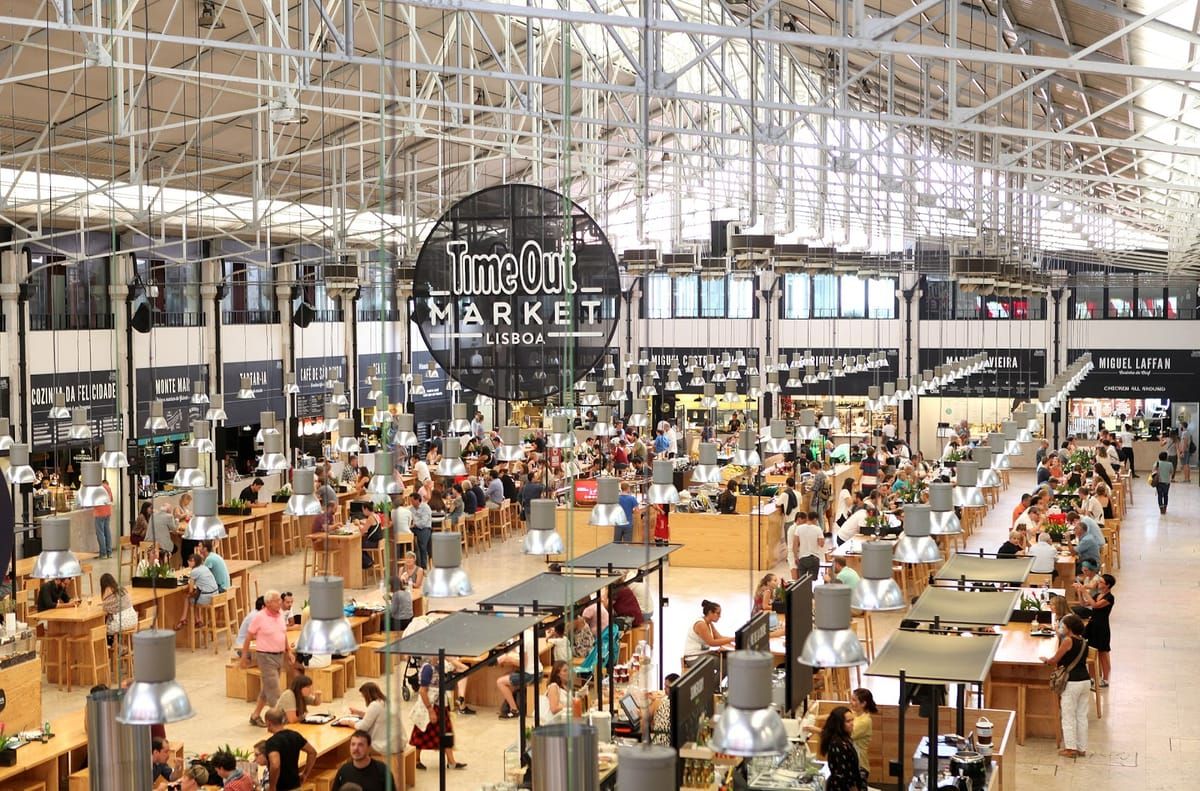
Lisbon is the snackpacking capital of Western Europe, and the centrepiece is the Time Out Market Lisboa, housed inside the historic Mercado da Ribeira down by the river. It brings together around twenty-six restaurants and eight bars — each one curated by Time Out's food critics — under one enormous roof, with everything from grilled sardines and bifana pork sandwiches to pastel de nata and modern Portuguese dishes. This is the easiest introduction to Lisbon's food scene for a first-time visitor, and it is open until midnight most nights. For a more local, less touristy experience, the Mercado 31 de Janeiro in the Arroios district is the next step.
2.Barcelona — La BoqueriaView on Booking.com ↗
Spain
La Boqueria (officially Mercat de Sant Josep de la Boqueria) is the single most famous food market in Spain. It sits directly off Las Ramblas in the middle of Barcelona and has been operating in various forms since the thirteenth century — the current iron market hall is from 1840. Inside you will find fresh seafood, jamón stalls, tapas counters, fruit bars that blend cups of mango and passionfruit to order, and some of the best-value seafood bars in the city. Go early, before the tourist crowd arrives around 11am. For a more local alternative, head slightly out of the tourist zone to the Mercat de Sant Antoni, which was fully renovated in 2018 and has become a favourite of Barcelona locals.
3.Madrid — Mercado de San MiguelView on Booking.com ↗
Spain
Mercado de San Miguel, just steps from Madrid's Plaza Mayor, is housed in a restored 1916 iron-and-glass market hall and has been reinvented as one of Spain's most famous gourmet food markets. It is not the place for a weekly shop — this is an upscale grazing destination where you move from counter to counter ordering a single oyster here, a croquette there, a glass of cava, a slice of jamón ibérico, a bite of Galician pulpo. In the evenings it becomes one of the liveliest social spaces in central Madrid. Pair it with a stop at the nearby Mercado de San Antón in the Chueca neighbourhood for a more local version of the same idea.
4.Florence — Sant'Ambrogio and Mercato CentraleView on Booking.com ↗
Italy
Florence has two markets that every snackpacker should build a trip around. Mercato di Sant'Ambrogio, designed in 1873 by architect Giuseppe Mengoni (who also designed the Galleria Vittorio Emanuele II in Milan), is the oldest still-operating market in Florence and the one the locals actually use. It is open Monday to Saturday from 7am to 2pm and has everything from fresh fruit and vegetables to cold cuts, cheese, fish, tripe stalls and a legendary tavola calda called Da Rocco where the food has been served from the mid-1980s. The second market, Mercato Centrale, has a more polished upstairs food hall aimed at visitors, with individual stands offering Florentine specialities. Use Sant'Ambrogio for the local experience and Mercato Centrale for late-night convenience.
5.Palermo — Vucciria, Ballarò and CapoView on Booking.com ↗
Sicily, Italy
Palermo has the most chaotic and atmospheric street food culture in Europe. Three historic market districts — Vucciria, Ballarò and Capo — form the backbone of the city's snackpacking scene. This is where you try the classics: arancine (the feminine form used in Palermo, rather than the masculine arancini used on the eastern side of the island), panelle chickpea fritters, sfincione Sicilian pizza, pane ca' meusa (spleen sandwich, if you are brave), and countless versions of granita. Palermo's food is stand-up, paper-wrapped and mostly under five euros a portion. Go hungry, stay three days, eat everything.
6.Naples — Pignasecca and the cuoppo traditionView on Booking.com ↗
Italy
Naples is the only city in Italy where the pizza is world-famous and still somehow underrated. Beyond pizza, the city's snackpacking scene is built around the Pignasecca market in the Spanish Quarters, one of the oldest open-air markets in Naples, plus a city-wide tradition of eating cuoppo — a paper cone filled with fried fish and vegetables — from fry shops called friggitorie. You also want to try sfogliatella (the flaky ricotta pastry), pizza fritta (fried pizza, a Neapolitan speciality from the postwar period), and a proper Neapolitan coffee at a stand-up bar. Three days in Naples and you will eat better than in most countries.
7.Athens — Varvakios Central MarketView on Booking.com ↗
Greece
The Varvakios Central Market (Κεντρική Δημοτική Αγορά Αθηνών, often called the Athens Central Market) is the largest food market in Athens and has been operating at its current site since 1886. It is split into two halves: the meat and fish market on one side, the fruit and vegetable market on the other, with some of the oldest tavernas in the city wedged between them. Market tavernas like Diporto Agoras (which has no sign and no printed menu) serve straightforward Greek food at lunchtime that is genuinely better than most sit-down restaurants in the tourist zones. Add in the bakeries around Omonia Square for bougatsa and tyropita and you have a full Athens snackpacking day for under thirty euros.
8.Istanbul — Spice Bazaar and KadıköyView on Booking.com ↗
Turkey
Istanbul's old-city Spice Bazaar (Mısır Çarşısı) dates from the 1660s and is the most obvious starting point for a first-timer — baklava, Turkish delight, tea, dried fruit, spices. But the real snackpacking destination in Istanbul is Kadıköy, on the Asian side of the Bosphorus, which has a denser concentration of street food, bakeries, fish sandwich boats and stand-up simit stalls than anywhere on the European side. Take the ferry across at lunchtime, eat your way through Kadıköy for a few hours, and ferry back at sunset for the best city view in Europe. It is the single best food day in Istanbul for under twenty euros.
A few tips for planning a snackpacking trip through Southern Europe. Most of the best markets are open in the morning only — Sant'Ambrogio closes at 2pm, La Boqueria is best before 11, and the Palermo markets empty out after lunch. Stay at a hotel within walking distance of the market in each city, not on the outskirts, because the walk to breakfast is half of the experience. Learn the names of five or six local specialities before you arrive and order them in order. And do not try to fit every city on this list into one trip — pick two or three and go deep rather than racing through.
Not sure which combination works for your dates? Try our AI chatbot on the homepage — tell it how many days you have and whether you are after Italian, Iberian, Greek or Turkish food and we'll help you shortlist hotels near the markets in each city.
If you are building a longer Southern Europe food trip, we also have guides to the best hotels in Lisbon, Barcelona, Naples, Taormina in Sicily and Lecce in southern Italy.
Ready to book your trip? Let Goatodeer find the best hotels and flights for you.
Start your trip →